
Exploring the expanded Australian label, the significance of Revysol® technology and the practical opportunities for contemporary turf disease programs.
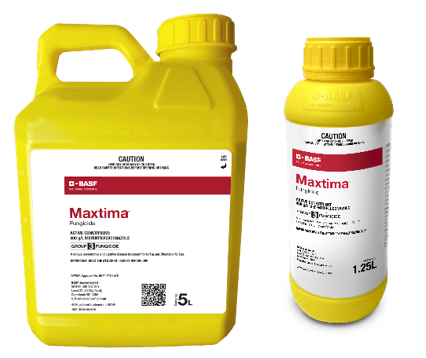
The Australian turf industry is continually challenged by evolving disease pressures, increasing expectations for turf quality, and the need to manage fungicide resistance responsibly. Against this backdrop, the recent expansion of the Maxtima fungicide label represents one of the most significant developments in turf disease management in recent times.
Powered by BASF's Revysol technology, Maxtima was already recognised for its broad-spectrum activity, exceptional turf safety, and flexibility of use. The latest label extension further expands its role within modern fungicide programs, providing turf managers with additional disease control options while strengthening access to Group 3 (DMI) chemistry throughout the year.
What has changed?
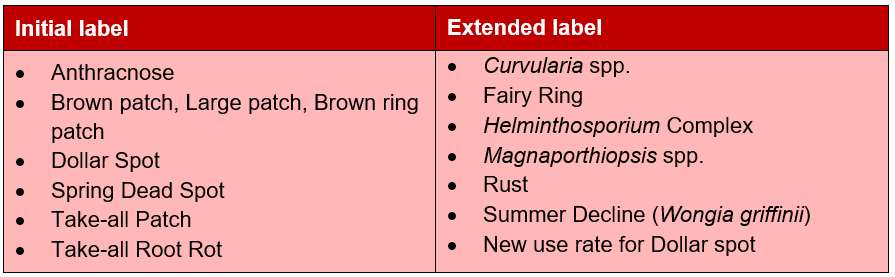
The label extension builds Maxtima’s original disease spectrum, adding six further disease claims alongside a new use rate for Dollar spot. The extended label transforms Maxtima from a strong broad-spectrum DMI into one of the most comprehensive Group 3 fungicide options available to Australian turf managers.
Finally, a DMI for Every Season
Historically, many turf managers have approached traditional Group 3 fungicides cautiously during periods of heat stress or active growth.
Conventional DMI molecules can often contribute to unwanted plant growth regulation effects, turf thinning, or phytotoxicity when conditions become stressful. As a result, many turf managers reduce or avoid DMI use during parts of the year, creating gaps in resistance management programs.
Revysol changes that equation.
Because the active ingredient is rapidly absorbed and retained within the leaf rather than accumulating at leaf tips, Maxtima delivers disease control without the turf safety limitations commonly associated with traditional DMI chemistries. This ability to access Group 3 chemistry for any turf, at any temperature, anywhere in your enterprise, is one of the most important advantages of the product.
Rather than sidelining DMIs during periods of high turf sensitivity, turf managers can continue to incorporate Group 3 chemistry into disease management programs when needed, maintaining diversity of modes of action and helping to manage resistance pressure on other fungicide groups.
Why This Matters
Maxtima is already recognised for its proven performance against Ectotrophic Root-Infecting (ERI) diseases and other difficult pathogens. The expanded label builds on this established strength by adding important new claims for Magnaporthiopsis spp. and Summer Decline - diseases for which registered management options remain limited.
These additions give turf managers greater flexibility to incorporate Maxtima into preventative ERI programs before visible symptoms develop, helping protect turf quality while broadening access to Group 3 chemistry. For a sustainable, season-long approach, Maxtima can also be rotated with complementary modes of action, including BASF’s Group 7 fungicide Xzemplar®, which offers an alternative technology for these important disease targets.
The Industry's First Isopropanol-Azole
Revysol introduced the world's first isopropanol-azole molecular structure, representing the first major advancement within the DMI class in decades. This unique molecular flexibility allows the active ingredient to adopt different conformations when binding to fungal target sites, improving binding strength and performance compared with traditional DMI chemistries.
While the chemistry behind this advancement is sophisticated, the practical outcome is straightforward:
• Stronger disease control
• Reliable activity on a broad range of pathogens
• Rapid uptake into plant tissue
• Long-lasting residual protection
• Exceptional turf safety
For turf managers, the most visible benefit is flexibility.
Looking Ahead
The latest Maxtima label extension is a significant update. It reflects a continued shift toward preventative disease management, broader spectrum protection, and more sophisticated resistance management strategies within the Australian turf industry.
With the addition of several important new disease claims, backed by a globally developed active ingredient and a unique molecular structure designed to overcome traditional DMI limitations, Maxtima now offers turf managers something that has long been sought but rarely achieved: genuine access to DMI chemistry throughout the year. For an industry striving to maintain high-performance playing surfaces under increasing pressure, that represents a meaningful step forward in modern turf disease management.
Visit Maxtima® to learn more and explore the BASF fungicides solutions range through stewardship hub or contact our BASF Turf solutions team directly here to learn about our pipeline of innovation.